
Table of Contents
- What Makes a Speciality Coffee Shop Worth Your Time
- What Is Specialty Coffee and Why the Spelling Matters
- Specialty Coffee vs Regular Coffee: The Real Differences
- How to Choose Specialty Coffee Beans You Will Actually Enjoy
- Specialty Coffee Brewing Methods: Match the Method to the Bean
- How to Evaluate a Speciality Coffee Shop: A Practical Checklist
- Bringing the Speciality Coffee Shop Experience Home
- Frequently Asked Questions
Last Updated: October 7, 2026
What Makes a Speciality Coffee Shop Worth Your Time
Walk into a speciality coffee shops counter and order an espresso, and you should taste something with a clear origin, a deliberate roast, and a barista who can explain it.
Below, we break down what separates a speciality café from a regular one, how to judge beans before you buy, and how to match a brewing method to the roast in your hand, the same criteria we use to select our own small-batch, single-origin roasts.
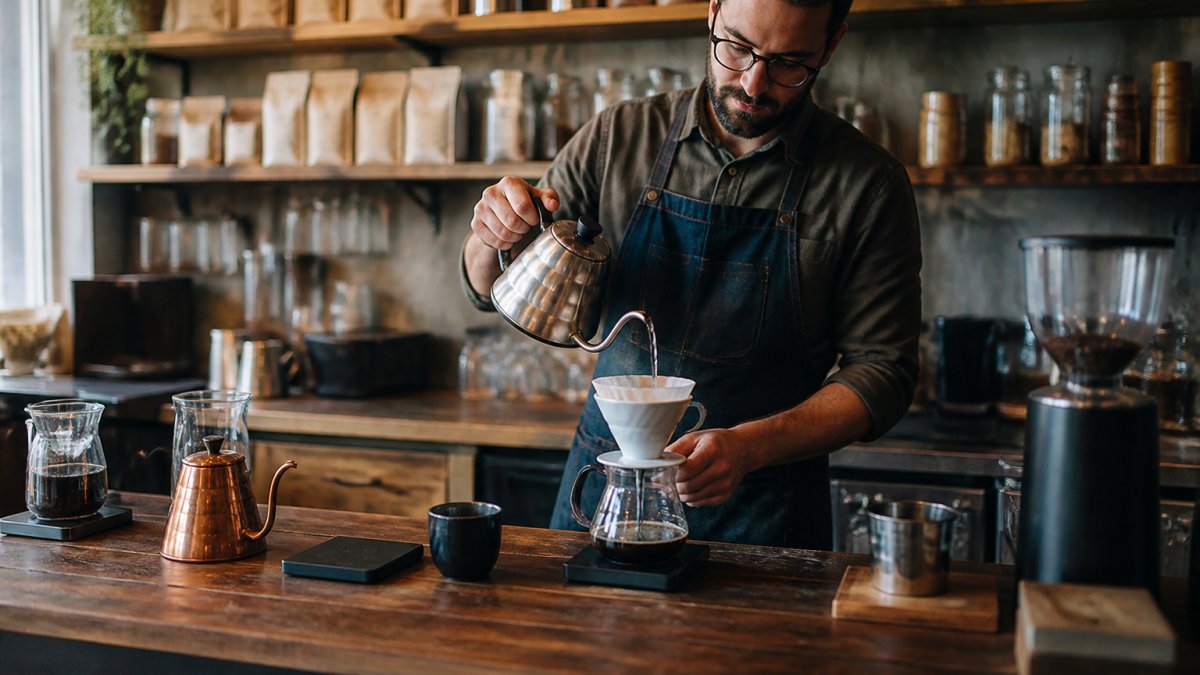
What Is Specialty Coffee and Why the Spelling Matters
Specialty coffee is coffee grown, processed, roasted, and brewed to a documented quality standard, with a grade of 80 or higher and a traceable origin. The spelling is regional: "speciality" is standard in British and Commonwealth English, "specialty" in the United States.
That standard is set by the Specialty Coffee Association's grading and cupping protocols, which define how beans are assessed for defects, flavor, and consistency. A lot only earns the grade after cupping by a trained evaluator, not after a marketing decision.
What most guides miss is that the term describes a supply chain, not a vibe.
Specialty Coffee Association cupping standards and green coffee grading
Specialty Coffee vs Regular Coffee: The Real Differences
Specialty coffee differs from regular coffee in four measurable ways: bean grade, traceability, roast intent, and freshness.
The practical differences show up in the cup:
| Factor | Regular Coffee | Specialty Coffee |
|---|---|---|
| Bean grade | Below 80 points, defects allowed | 80+ points, defect-screened |
| Origin detail | Rarely stated | Farm, region, or cooperative named |
| Roast approach | Uniform dark, hides flaws | Matched to bean and brew method |
| Freshness | Often undated | Roast date printed on bag |
| Price | Lower per bag | Higher, reflects grading and small lots |
Roast level is where the two diverge most visibly. A specialty roaster pulls a light roast early to preserve floral and citrus notes, while a commercial operation roasts dark to flatten variation across cheap lots. Neither is automatically better, but knowing which you're buying changes how you should brew it.
How to Choose Specialty Coffee Beans You Will Actually Enjoy
Choosing specialty coffee beans comes down to three decisions: roast level, origin, and grind format. Start with roast level, which dictates flavor more than origin does.
Origin matters next, but less than most packaging suggests. Blending across origins, as we do with our Morning Alibi, balances brightness against body deliberately.

Then check the grind. Whole bean stays fresher longer and lets you match the grind to your brewer; pre-ground is convenient but starts losing aromatic compounds within days of opening.
- Roast date printed on the bag, ideally within the last four weeks
- Origin or cooperative named, not just "South America"
- Roast level stated (light, medium, dark)
- Grind format matches your brewing method
- Whole bean if you own a grinder
Specialty Coffee Brewing Methods: Match the Method to the Bean
Specialty coffee brewing methods should complement the roast, not the other way around. A light, floral Ethiopian lot rewards a pour-over or AeroPress, where controlled contact time preserves acidity. A medium roast with chocolate and sugar notes works in a drip machine or French press.
Water temperature and ratio matter as much as the device. Most specialty brewers work in the 92-96°C range, with a ratio near 1:15 to 1:17 coffee to water. Grind size then fine-tunes the result: finer for shorter extractions, coarser for longer steeps.
The Specialty Coffee Association's brewing standards publish reference ratios and temperatures if you want a baseline before adjusting to taste. Our own Big Boss Blend, a medium roast with dark chocolate and toasted hazelnut notes, is offered in whole bean, drip ground, French press, and espresso grinds precisely because the right format depends on your setup, not ours.

How to Evaluate a Speciality Coffee Shop: A Practical Checklist
Evaluating a speciality coffee shop takes about five minutes if you know what to look for: roast dates on retail bags, a grinder calibrated per brew method, staff who can name the origin and process, and a menu that changes with what's fresh. But coffee quality is only half the decision, the other half is whether the shop fits how you drink coffee, and that's where most guides stop short.
Use this checklist on your next visit:
- Retail bags carry a printed roast date, not just a best-before
- Staff can name the origin, process, and roast level of the house filter
- Espresso and filter use separate grinders, or the grinder is adjusted between orders
- The menu lists at least one single-origin option alongside any blend
- Milk drinks don't bury the coffee entirely; you can still taste the roast
- Non-coffee and dietary options are clearly marked if you need them
- Seating and hours suit how you actually drink coffee, whether that's a quick bar stool or a two-hour table
The visit-planning details competitors skip
Most ranked lists call a café "great" without saying whether you can actually use it. Before committing to a trip, check the details that decide whether a shop works for your visit:
Price range. A speciality café charges more per cup than a chain because graded beans, smaller lots, and slower service cost more. The premium should show up in the cup, if a shop charges speciality prices but can't name what's in the grinder, it isn't justified. Expect filter coffee to sit above batch-brew prices because it's made to order.
Hours and peak times. Independent speciality shops often keep shorter hours than chains and may close early on weekdays.
Accessibility and entry. Step-free entry, door width, and accessible seating vary widely in older independent buildings. If accessibility matters to you, call ahead or check recent photos rather than assuming.
Seating and workspace. Decide what you need before you go: a standing bar is great for a quick espresso and terrible for a two-hour laptop session.
Dietary and non-coffee options. A serious speciality shop usually stocks at least one plant-based milk and can say which steams well.
Bringing the Speciality Coffee Shop Experience Home
Recreating a speciality coffee shop at home comes down to three things: fresh beans, a consistent grind, and a repeatable recipe. But most guides skip the supply chain behind the beans, where they were grown, how they were processed, how they were roasted. Understanding that chain separates a home brewer who follows instructions from one who can taste why a cup works.
Sourcing: what the label should tell you
Speciality coffee is traceable, so the bag should name more than a country: look for the farm, cooperative, or washing station, plus the process, washed, natural, honey, or anaerobic. Process shapes flavor before roasting begins.
Altitude and variety are worth noting too: higher-grown beans develop denser structure and more acidity, while names like Bourbon, Typica, Gesha, or Pacamara hint at the cup profile. You don't need to memorize any of it, but a roaster who prints it knows their supply chain.
Roasting: why roast level changes everything
Roast level is the biggest lever a roaster pulls, and it most affects how you brew at home. A light roast preserves origin character, florals, citrus, stone fruit, but is denser and less soluble, needing hotter water, a finer grind, or longer contact time.
Medium roasts sit in the middle and are the safest starting point while dialing in your setup. The practical takeaway: match your brew method to the roast. Brew a light, floral Ethiopian lot in a machine built for dark-roast drip and you'll taste thin, sour coffee and blame the beans, but the method is the problem.
Brewing methods: match the device to the bean
Water temperature and ratio matter as much as the device. Most specialty brewers work in the 92-96°C range, with a ratio near 1:15 to 1:17 coffee to water. Grind size then fine-tunes the result: finer for shorter extractions, coarser for longer steeps. The Specialty Coffee Association's brewing standards publish reference ratios and temperatures if you want a baseline before adjusting to taste.
A repeatable home recipe
Pick one method, one ratio, and one temperature, then change a single variable at a time. Sour or thin? Grind finer or raise the water temperature slightly. Bitter or dry? Grind coarser or shorten the contact time. Keep notes for a week and you'll learn more about your palate than any guide can teach.
That's the standard we build Bootleggin Johnny around. Our small-batch roasting and single-origin beans suit exactly this kind of home brewing, whether you're working through The Sampler's five 4 oz roasts or committing to a full 12 oz bag of The Morning Alibi.

Frequently Asked Questions
What is considered a speciality coffee shop?
A speciality coffee shop is a café that serves coffee scoring 80 or above on the Specialty Coffee Association scale, uses freshly roasted beans, and employs trained baristas who understand extraction and brewing. These shops typically offer single-origin options, pour-over and espresso drinks, and often roast their own beans or partner with a local coffee roaster. The focus sits on traceability, coffee sourcing, and consistent coffee quality rather than volume.
How can you tell if a coffee shop serves specialty coffee?
Look for a posted roast date on bags, a menu that names coffee origins and roast profiles, and baristas who can explain tasting notes without reading from a script. Equipment matters too: a quality grinder, a scale at the espresso station, and pour-over gear on the counter all signal a specialty operation. If the shop lists single-origin coffee and describes brewing methods, that is a strong indicator of specialty coffee quality.
What should you look for when choosing specialty coffee beans?
Check the roast date first, since freshly roasted beans peak within two to four weeks. Look for a named coffee origin, a stated roast profile, and tasting notes that match your preference for brightness or depth. Whole bean preserves flavor longer than pre-ground. If you enjoy bold, full-bodied coffee, a medium or dark roast from Colombia or Sumatra works well. Lighter roasts from Ethiopia or Nicaragua suit those who prefer floral and citrus notes.
What is the difference between specialty coffee and regular coffee?
Regular coffee typically uses commodity-grade beans graded below 80 points, often roasted in large batches with no origin detail. Specialty coffee uses high-quality beans with traceable coffee sourcing, roasted in smaller batches to highlight distinct flavor characteristics. The result is a cup with clearer tasting notes, less bitterness, and a documented path from farm to roaster. Specialty coffee shops also invest in barista skill and brewing method precision that mass-market cafés rarely match.
Are bourbon-inspired specialty coffees actually infused with bourbon?
Bourbon-inspired roasts use flavor notes that evoke bourbon through the roasting process and bean selection, not actual alcohol infusion. The tasting notes come from the coffee origin and roast profile, which means the beans brew and store like any other specialty coffee. You can use your standard specialty coffee brewing methods, whether that is pour-over, drip, or espresso, without adjusting your routine.
The hardest part of speciality coffee isn't finding good beans, it's finding them fresh, traceable, and matched to how you actually brew. Bootleggin Johnny roasts in small batches, sources single-origin beans, and ships bold, Prohibition-era-inspired blends straight to your door, so the quality you'd hunt for at a café counter arrives already dated and ready. Shop bold blends and taste the difference a fresh roast makes.