
Table of Contents
- Why Bourbon Barrel Aged Coffee Tastes Different
- Bourbon Barrel Aged Coffee Beans: What to Look For
- Does Bourbon Flavored Coffee Contain Alcohol?
- Bourbon vs Rye vs Whiskey Barrel Aging: Flavor Differences
- How to Brew Barrel Aged Coffee for the Best Cup
- Buying Barrel Aged Coffee: Value, Freshness, and Storage
- Frequently Asked Questions
Last Updated: October 12, 2026
Why Bourbon Barrel Aged Coffee Tastes Different
Bourbon barrel aged coffee is coffee stored in oak barrels previously used to age bourbon, absorbing the barrel's residual spirit and wood character.
The mechanism is simple: oak is porous, and a used bourbon barrel still holds traces of spirit and the wood's natural sugars. Green coffee beans are hygroscopic, so they pull in that barrel character.
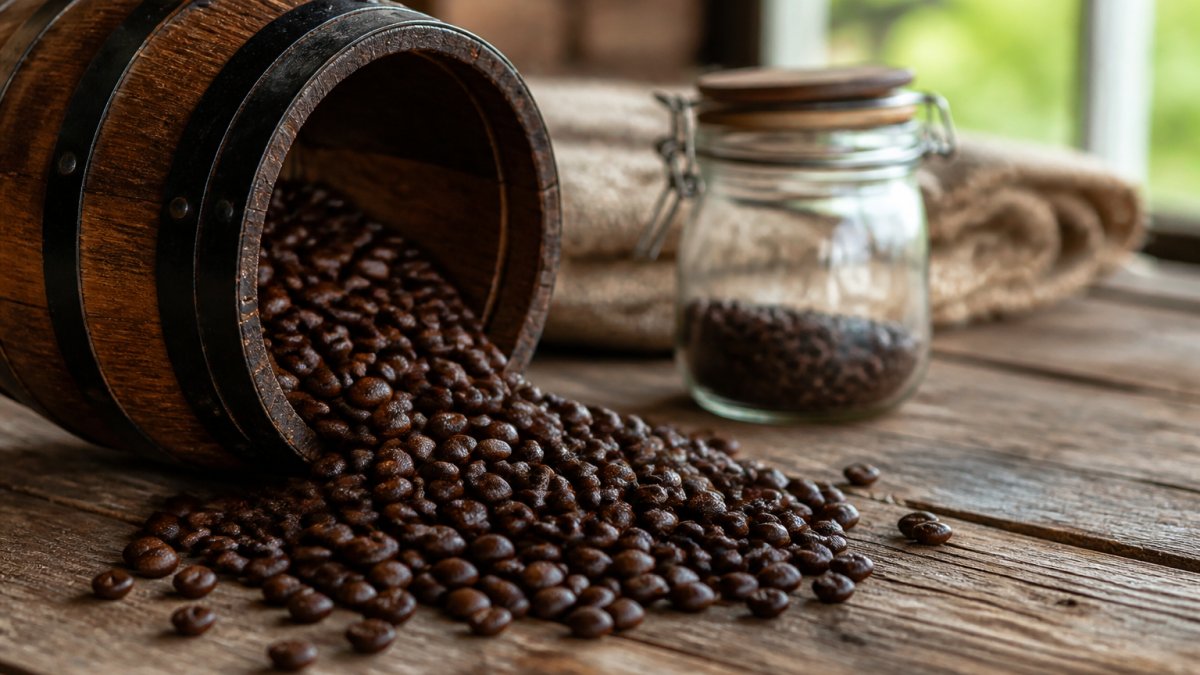
How the Aging Process Works
A producer loads green, unroasted beans into a freshly dumped bourbon barrel. The beans rest for several weeks while the barrel is rotated or agitated to keep contact even. Timing matters: too short and the barrel influence never develops; too long and the coffee tastes like wet wood.
After aging, the beans are roasted, where a lot of barrel aged coffee goes wrong. A dark roast scorches away the delicate barrel notes you paid for, while a careful medium roast preserves the vanilla and caramel.
Bourbon Barrel Aged Coffee Beans: What to Look For
The best bourbon barrel aged coffee beans share three traits: a clear origin, a medium roast level, and a barrel type the roaster actually names. If a bag lists "barrel aged" with no further detail, treat that as a red flag.
Origin, Roast Level, and Barrel Type
Origin sets the base flavor. Brazilian single-origin brings chocolate and nut notes that pair well with bourbon's sweetness; Colombian adds caramel and mild citrus; Guatemalan contributes cocoa and gentle spice.
Roast level determines how much barrel character survives. Medium roasts are the sweet spot for most barrel aged coffee. Dark roasts can work, but they tend to bury the spirit notes under smoke and bitterness.
Barrel type is the variable buyers overlook most. A freshly dumped barrel imparts far more character than one that has sat empty for months.
| What to Check | Strong Signal | Weak Signal |
|---|---|---|
| Origin | Named single-origin country | "Blend" with no detail |
| Roast level | Medium, stated clearly | Unspecified or extra dark |
| Barrel type | Named spirit and barrel source | "Barrel aged" only |
| Roast date | Printed on the bag | No date at all |
| Aging duration | Stated in weeks | Not mentioned |
Does Bourbon Flavored Coffee Contain Alcohol?
No. Bourbon flavored coffee and barrel aged coffee contain no alcohol, because the alcohol evaporates during roasting. The beans absorb aroma compounds from the barrel, not the liquid spirit.
It's the question we field most often. The name "bourbon barrel aged coffee" sounds like it should carry a proof, but what you taste is the barrel's woody, vanilla-forward character, not whiskey.
That said, a small number of producers add artificial flavoring or a spirit-based syrup after roasting, and those products can contain trace alcohol.
Bourbon vs Rye vs Whiskey Barrel Aging: Flavor Differences
The barrel's previous contents change the cup more than most buyers expect.
Bourbon barrels are charred American oak, releasing vanillin and caramelized sugars, which is why bourbon barrel aged coffee tends toward dessert-like notes.
Here's what most guides miss: the difference between these coffees is often smaller than the difference between a fresh barrel and a tired one.
If you want to compare them properly, buy from roasters who name the distillery or at least the barrel's prior use. Our bourbon-inspired flavor profiles are designed for sophisticated palates.
How to Brew Barrel Aged Coffee for the Best Cup
Brew barrel aged coffee with methods that preserve its aroma, not drown it, and the right method depends on the barrel type and roast level. A bourbon-barrel coffee with heavy vanilla and caramel notes performs differently than a rye-barrel coffee with peppery spice.
Match Your Brew Method to the Barrel and Roast
Identify the dominant flavor profile on the bag, then choose a method that amplifies those notes.
- Bourbon barrel, medium roast: Pour-over or Chemex. The paper filter traps some oils but lets the vanilla and caramel clarity shine. Use a medium grind (like table salt) and water at 200-205°F. A 1:16 coffee-to-water ratio works well.
- Rye barrel, medium or medium-dark roast: Cold brew or French press. The spice and pepper notes can turn harsh with high heat, so cold extraction smooths them out. For cold brew, use a coarse grind and steep 14-18 hours at room temperature. For French press, steep 4 minutes and press slowly.
- Whiskey barrel (generic), dark roast: Espresso or moka pot. The darker roast already carries smoke and bitterness, so a concentrated shot balances the sweetness. Use a fine grind and a 1:2 ratio in espresso. If you don't have an espresso machine, a moka pot works.
- Any barrel type, light roast: Avoid. Light roasts don't develop enough sugars to carry the barrel character, and they often taste grassy or sour. If you have one, brew it as cold brew to mask the underdevelopment.
A Standardized Tasting Framework for Comparison
Most reviews say a coffee is "smooth" or "bold", which tells you nothing. To compare bourbon, rye, and whiskey barrel aged coffees side by side, use the same criteria every time, adapted from professional cupping.
- Aroma (dry): Smell the whole beans before grinding. Note vanilla, oak, caramel, spice, or alcohol-like scents. Rate intensity from 1 (faint) to 5 (pronounced).
- Aroma (wet): Smell the grounds after adding hot water. Barrel notes often bloom here.
- Sweetness: Take a sip. Is it sugary like caramel, or dry like dark chocolate? Rate 1-5.
- Oak character: Look for woody, sawdust, or vanilla-like tones. Too much oak tastes like a wet barrel. Rate 1-5.
- Spirit character: Does it remind you of bourbon, rye, or whiskey? Or is it just generic wood? Rate 1-5.
- Balance: Do the barrel notes complement the coffee's origin flavors, or do they fight? Rate 1-5.
- Finish: How long does the flavor linger? A long, pleasant finish is a sign of quality. Rate 1-5.
Write down your scores. After three or four coffees, patterns emerge, you might prefer rye barrels for cold brew and bourbon barrels for pour-over.
Grind, Water, and Storage for Barrel Aged Coffee
Barrel aged coffee's aroma compounds are volatile. They evaporate quickly once the bean is broken. Grind right before brewing, and use within two weeks of the roast date.
Water matters too. Chlorine-heavy tap water flattens the barrel notes, so use filtered or bottled spring water with 50-100 ppm of total dissolved solids. If your coffee tastes dull, try a different water.
Store whole beans in an airtight container away from light and heat. A sealed bag with a one-way valve works.
Buying Barrel Aged Coffee: Value, Freshness, and Storage
Freshness is the single biggest factor in whether barrel aged coffee is worth its price. Barrel character fades with time, so a bag roasted three months ago tastes nothing like one roasted last week. Always check for a roast date; if a bag has none, assume it's old.
But freshness alone doesn't tell you if you're getting a good deal. You need to compare price per ounce, bean format, shipping, and availability. Most product pages hide these details. Here's how to cut through the noise.
Price Per Ounce: The Only Fair Comparison
Barrel aged coffee typically costs more than standard specialty coffee because the process takes weeks and yields less usable coffee. To compare fairly, calculate price per ounce.
- A 12-ounce bag for $20 is $1.67 per ounce.
- A 16-ounce bag for $24 is $1.50 per ounce.
- A 8-ounce bag for $15 is $1.88 per ounce.
Smaller bags often cost more per ounce, but they're a better value if you won't finish a larger bag before the flavor fades.
Watch for subscription discounts, many roasters offer 10-15% off recurring orders, which lowers the per-ounce price. But don't subscribe just for the discount if you don't drink it fast enough.
Bean Format: Whole Bean vs. Ground
Whole bean is almost always better for barrel aged coffee. The aroma compounds that carry barrel character are volatile and start escaping as soon as the bean is ground.
That said, some roasters offer ground options for convenience. If you must buy ground, choose a grind size that matches your brew method and use it within a week.
Single-serve pods exist for barrel aged coffee, but they're a compromise, the coffee is pre-ground and often stale by the time you brew it.
Shipping and Availability
Barrel aged coffee is often a seasonal or limited release. Some roasters produce it year-round, but many release batches when they get fresh barrels from a distillery, so availability can be unpredictable.
Check shipping costs before you buy: a $15 bag with $8 shipping costs more per ounce than a $20 bag with free shipping.
Consider local pickup if you have a roaster nearby, you'll get the freshest coffee and avoid shipping delays. Buying online, look for roasters that ship within one to two days of roasting.
A Simple Buying Checklist
Before you add a bag to your cart, run through these questions:
- Is there a roast date? (If not, skip it.)
- What is the price per ounce? (Compare across brands.)
- Is it whole bean? (If not, can you use it within a week?)
- Does the roaster name the barrel type and distillery? (Transparency signals quality.)
- How much is shipping? (Factor it into the total cost.)
- Is it a limited release? (If so, buy when you see it, but don't hoard.)
Storage After Purchase
Once you open the bag, store the beans in an airtight container away from light and heat. Don't refrigerate or freeze unless you're storing for more than a month. If you do freeze, use a vacuum-sealed bag and let it come to room temperature before opening to avoid condensation.
For gift-givers, a variety box lets the recipient compare bourbon, rye, and whiskey barrel aged coffees side by side, the fastest way to learn which barrel type suits their palate. Look for boxes with tasting notes and brewing suggestions.
Specialty Coffee Association's guide to coffee freshness
Frequently Asked Questions
Does bourbon barrel aged coffee contain alcohol?
No. The beans absorb aroma and flavor compounds from the barrel's wood and residual spirits, but the roasting process burns off any trace alcohol. Independent testing of barrel-aged coffee consistently shows no measurable alcohol content. If you're avoiding alcohol for dietary, religious, or medical reasons, barrel-aged coffee is safe to drink. The whiskey character comes from the wood, not from liquid spirits remaining in your cup.
What does bourbon barrel aged coffee taste like?
Expect notes of vanilla, caramel, dark chocolate, and oak, with a subtle whiskey warmth that lingers in the finish. The spirit character is present but not overpowering; it complements the bean's natural profile rather than masking it. Single-origin beans from Brazil or Colombia tend to carry chocolate and nutty base notes that pair well with bourbon barrel influence, while Guatemalan beans bring citrus and brightness that cuts through the oak.
How should you brew bourbon barrel aged coffee?
Pour-over and French press work best because they preserve the aromatic complexity that makes barrel-aged coffee distinctive. Use a slightly coarser grind than you would for standard drip, and keep water just off boil (around 93°C) to avoid scorching the delicate spirit notes. Cold brew is another strong option; steeping for 16-18 hours pulls out the caramel and vanilla sweetness without any bitterness. Avoid espresso unless you prefer a very intense, concentrated cup.
How is bourbon barrel aged coffee made?
Green coffee beans are placed inside freshly dumped bourbon barrels, where they rest for several weeks. The beans absorb volatile compounds from the oak and the residual spirit left in the wood. After aging, the beans are roasted to the roaster's chosen level, which locks in the barrel character. The quality depends on barrel freshness, aging duration, and how the roast level balances the wood and spirit notes against the bean's original flavor.